

Soffit vs Fascia Differences Homeowners Should Know

A stained strip beneath the roof edge or peeling board behind the gutters can look like a minor cosmetic issue. Often, it is the first visible sign that water, poor ventilation, or aging materials are affecting the roofline. Understanding soffit vs fascia differences helps homeowners describe the problem accurately and address it before it leads to more expensive roof, gutter, or siding repairs.
Soffit and fascia work beside each other, but they are not interchangeable. One protects and ventilates the underside of the eaves. The other finishes the roof edge and provides critical support for the gutter system. Both need to be in good condition to keep a home protected through rain, snow, ice, and changing temperatures.
What Is Fascia?
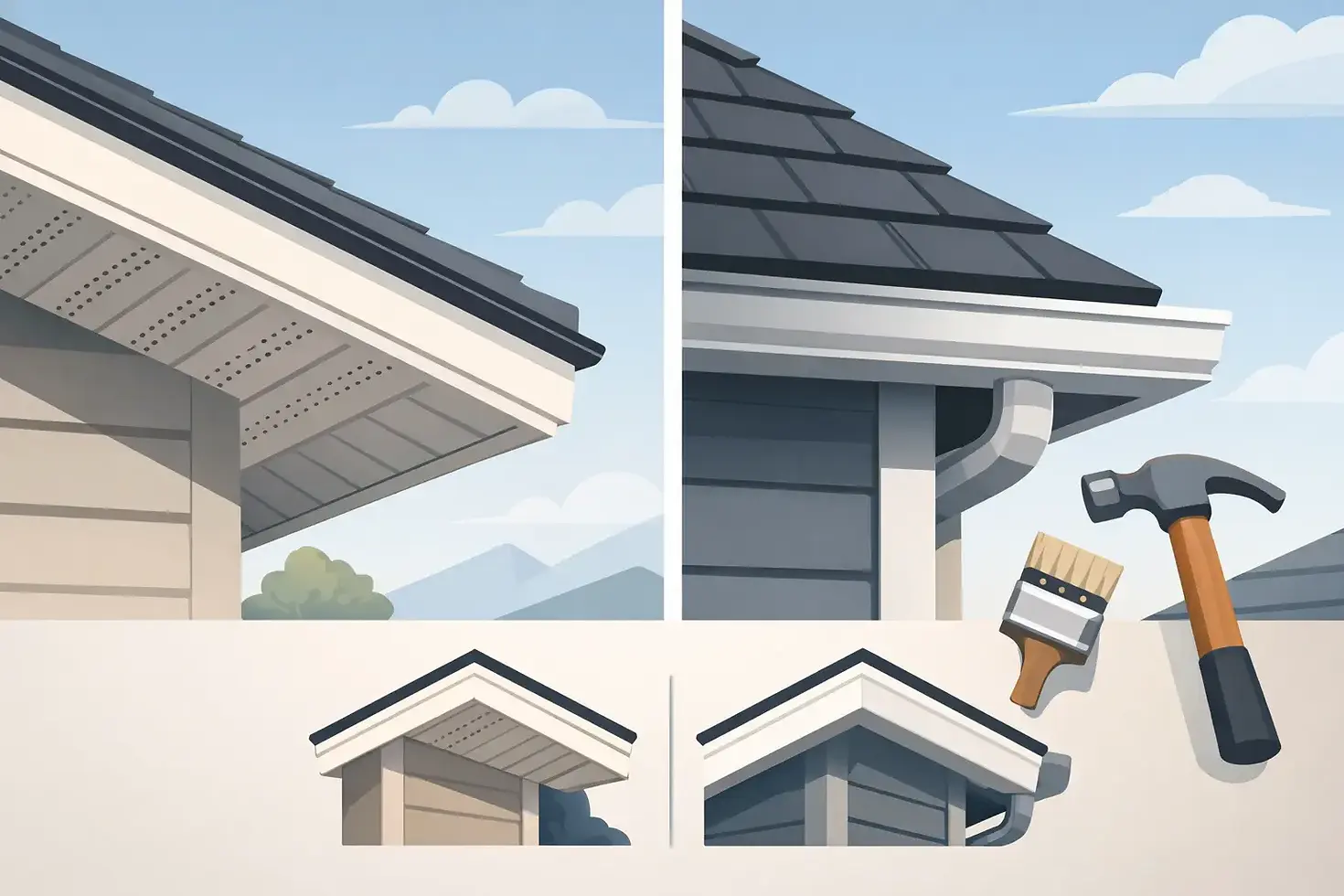
Fascia is the long, straight board installed vertically along the lower edge of a roof. It sits behind the eavestroughs and follows the roofline around the house. On many homes, it is the most visible trim at the edge of the roof.
Its main job is structural and protective. Fascia covers the exposed ends of the roof rafters, creating a clean finished edge. It also provides the solid mounting surface needed to secure eavestroughs. When gutters are full of water, snow, or ice, the fascia board carries much of that load.
Fascia is commonly made from wood, aluminum, vinyl, composite material, or PVC. Wood fascia can look excellent when properly maintained, but it is vulnerable to rot when water gets behind failing gutters or damaged drip edge. Aluminum fascia is a common low-maintenance choice because it resists rot and can be installed as a protective wrap over sound wood.
A fascia problem may show up as sagging gutters, soft wood, peeling paint, dark stains, loose gutter fasteners, or gaps at the roof edge. These are not details to ignore. A weak fascia board can allow gutters to pull away from the home and direct water toward the siding, foundation, and roof structure.
What Is Soffit?
Soffit is the finished surface on the underside of the roof overhang. If you stand close to your home and look upward beneath the eaves, you are looking at the soffit.
While fascia faces outward, soffit faces downward. It closes off the underside of the roof overhang, protecting rafters and roof decking from moisture, insects, birds, and other pests. Just as importantly, many soffit systems contain intake vents that bring fresh air into the attic.
That attic airflow matters. Air enters through vented soffit panels and exits near the top of the roof through appropriate exhaust ventilation. When the system is designed properly, it helps reduce heat and moisture buildup in the attic. In cold-weather regions, balanced ventilation can also help limit conditions that contribute to ice dams.
Soffit materials include aluminum, vinyl, wood, fiber cement, and composite products. Vented aluminum or vinyl panels are popular because they are durable, low maintenance, and available in colors that coordinate with siding and fascia. Solid panels may also be used where ventilation is not needed, but the overall attic ventilation plan should always be considered first.
Soffit vs Fascia Differences at a Glance
The easiest way to remember the difference is placement. Fascia is the vertical face at the roof edge, usually directly behind the gutter. Soffit is the horizontal or angled underside of the eave.
Their purposes are different as well. Fascia finishes and protects the roof edge while supporting the eavestroughs. Soffit closes the underside of the overhang and often allows air to enter the attic. Both improve the home’s appearance, but their real value is in protecting the roof system from water, moisture, and deterioration.
Because the pieces connect at the roof edge, one issue can affect the other. For example, an overflowing gutter may soak fascia and allow water to reach the soffit. A leaking roof edge can stain soffit panels. Blocked soffit vents can trap moisture in the attic, which may eventually damage roof decking and insulation.
Why Roofline Problems Often Start With Water
Most fascia damage begins when water does not drain where it should. Clogged eavestroughs, loose downspouts, damaged drip edge, or ice buildup can force water behind the gutter. Once moisture reaches exposed wood, rot can progress quietly until the fascia is no longer strong enough to hold gutter fasteners.
Soffit damage can have several causes. Wind-driven rain may enter through gaps at the roof edge. A roof leak can travel along framing and appear as a stain on the soffit. Animals may tear into loose panels, while insects can nest in unprotected openings. In some cases, the problem is not a leak at all but attic condensation caused by inadequate ventilation or air leaks from the living space below.
This is why a quick visual patch is not always enough. Replacing a stained soffit panel without finding the water source can leave the same issue hidden above it. A proper inspection should look at the shingles, roof edge, flashing, drip edge, gutter condition, ventilation, and the wood behind the finished materials.
Warning Signs Homeowners Should Watch For
Walk around your home after a heavy rain and look closely at the eaves. If gutters spill over, pull away from the roofline, or hold standing water, have them checked before fascia damage develops. Water marks running down the siding below the gutter are another common clue.
Look upward at the soffit from ground level. Brown staining, bubbling paint, warped panels, open seams, sagging areas, or visible nesting material deserve attention. On aluminum or vinyl soffit, dents and loose sections may allow pests or wind-driven moisture into the eaves.
Inside the home, signs can be less obvious. Musty attic air, damp insulation, frost on roof framing during cold weather, or recurring ice buildup along the eaves may point to a ventilation or air-sealing issue. The answer is not always adding more vents. The roof assembly needs the right balance of intake, exhaust, insulation, and air sealing.
Repair or Replacement: What Makes Sense?
A small, isolated area of damage can often be repaired if the surrounding materials and underlying wood are still sound. For instance, a loose soffit panel or a short section of damaged aluminum fascia may be replaced without rebuilding the entire roofline.
Replacement becomes the better long-term decision when wood fascia is soft or rotted, gutters have repeatedly loosened, soffit damage extends across multiple areas, or the materials are near the end of their service life. If roofing, siding, or eavestrough replacement is already planned, it is often practical to inspect and update fascia and soffit at the same time. This avoids removing and reinstalling finished materials later.
Material selection depends on the home and the condition underneath. Aluminum fascia and vented soffit offer a clean, durable finish with limited maintenance, but they cannot solve hidden rot on their own. Damaged wood must be repaired or replaced before new covering is installed. Doing the job right the first time means correcting the cause, not simply covering it.
How Proper Soffit and Fascia Protect the Whole Home
A sound roofline keeps the gutter system secure, protects the roof’s exposed edges, limits pest entry, and supports attic ventilation. It also gives the home a finished appearance that holds up better over time. These components may not get the same attention as shingles or siding, but they are part of the same exterior protection system.
For homeowners, the practical takeaway is simple: do not wait until a gutter falls or a soffit section comes loose. Small stains, sagging eavestroughs, and peeling trim are worth checking early, especially after severe weather or a difficult winter.
If you see changes around your roofline, a qualified exterior contractor can determine whether the concern is limited to soffit or fascia, or whether it points to a larger roofing, drainage, or ventilation issue. A clear assessment now can help protect your home from avoidable damage later.


Comments