

How to Prevent Ice Dams on Your Roof

A few inches of snow on the roof might not seem like a problem. Then the temperature shifts, meltwater starts moving, and by morning you have a ridge of ice at the eaves, water backing up under shingles, and stains showing up on the ceiling. If you are wondering how to prevent ice dams, the answer is not one quick fix. It comes down to controlling heat loss, ventilation, and drainage so the roof stays cold and water has a clear path off the house.
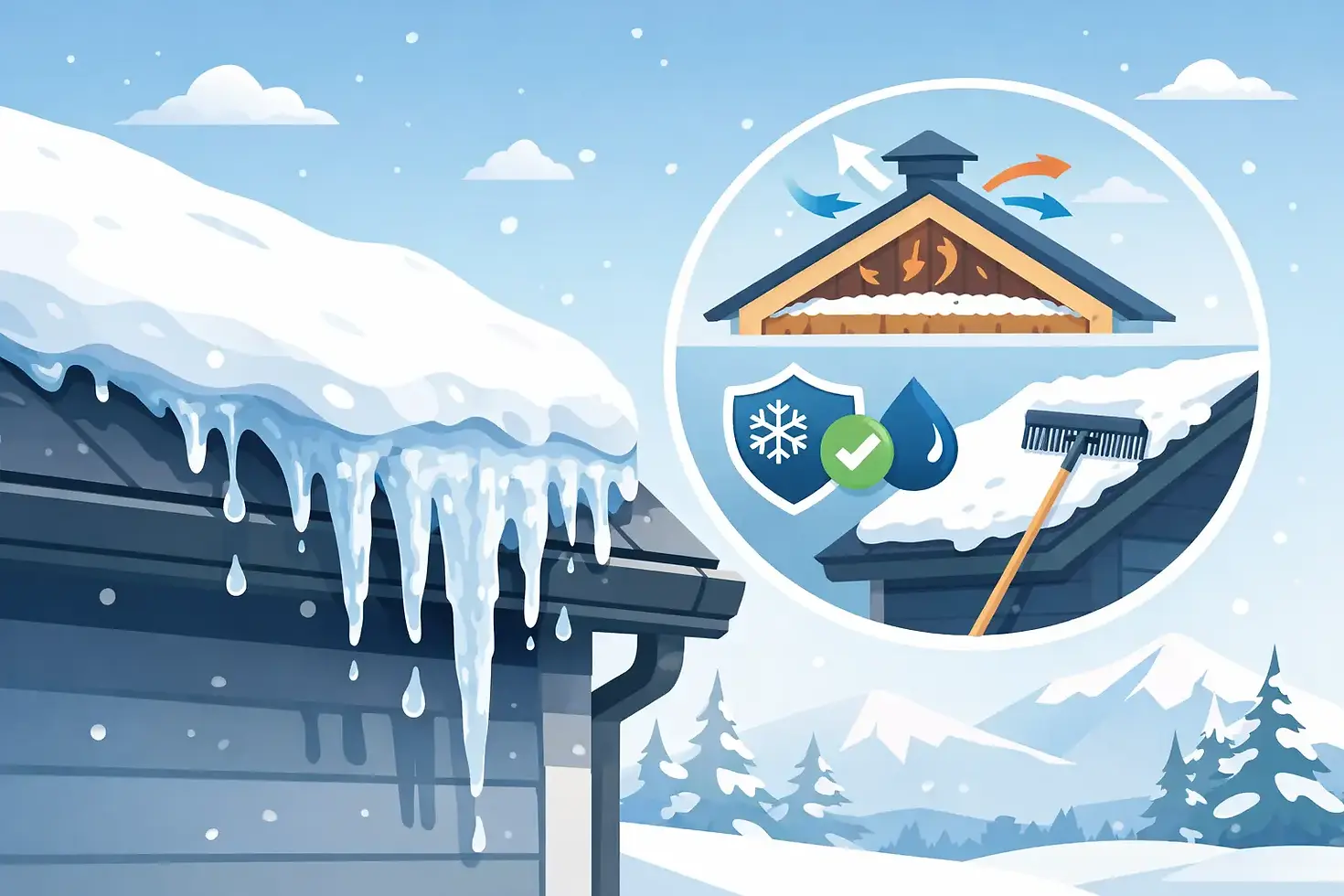
In Ottawa-area winters, ice dams are common because roofs go through repeated freeze-thaw cycles. Snow melts higher up on a warm roof, runs down to the colder edge, and freezes again near the overhang. That buildup keeps growing. Once water gets trapped behind it, it can work its way under shingles and into the roof deck, insulation, walls, and ceilings.
Why ice dams form in the first place
The real cause is usually uneven roof temperature. A properly performing roof in winter should stay consistently cold. When heat escapes from the living space into the attic, it warms the roof deck from below. Snow melts in the warmer sections, then refreezes at the colder edges where there is less heat loss and more exposure to outside air.
That is why ice dams are rarely just a gutter problem. Gutters can contribute if they are clogged or poorly pitched, but most recurring ice dam issues start with conditions inside the house. Air leaks, thin attic insulation, blocked soffit vents, and poor attic airflow all play a role.
Roof design matters too. Low-slope sections, valleys, skylights, and long eave overhangs can create spots where snow and meltwater collect. Some homes are simply more prone to the problem, which is why prevention has to be tailored to the structure rather than treated like a one-size-fits-all job.
How to prevent ice dams with insulation and air sealing
If you want to know how to prevent ice dams for the long term, start in the attic. The goal is to stop warm indoor air from reaching the underside of the roof.
Air sealing comes first. Even a well-insulated attic can still leak a surprising amount of heat if warm air is escaping through gaps around light fixtures, plumbing stacks, wiring penetrations, attic hatches, bathroom fans, and top plates. Those small openings let heat and moisture rise into the attic, warming the roof deck and creating the conditions for melting.
Once the attic is properly sealed, insulation helps hold indoor heat where it belongs. In many older homes, attic insulation is simply not deep enough by current standards, or it has settled over time. Uneven coverage is another common issue. One section may be adequately insulated while another is thin, which creates hot spots on the roof.
More insulation is not always the full answer by itself. If you add insulation without addressing airflow and moisture movement, you can still end up with problems. The best results usually come from treating air sealing and insulation as a package, not as separate upgrades.
Ventilation matters more than many homeowners realize
A cold attic is a big part of ice dam prevention. That is where ventilation comes in.
Good attic ventilation helps flush out excess heat and moisture before they build up. In most homes, this means intake vents at the soffits and exhaust vents near the ridge or high on the roof. The system has to work as a system. If soffit vents are blocked by insulation, or if there is not enough exhaust, airflow gets restricted and attic temperatures rise.
This is one area where partial fixes often disappoint. Homeowners sometimes add more roof vents without checking whether enough intake air is available at the eaves. Others improve soffit venting but still have blocked baffles or dead air spaces in hard-to-reach sections. The details matter.
Ventilation also helps manage attic moisture, which is important in winter. Warm, moist air that escapes into the attic can condense on cold surfaces, leading to frost, damp insulation, and wood deterioration. That moisture can reduce insulation performance and make ice dam conditions worse over time.
Roof-edge drainage still plays a role
Although ice dams usually start with heat loss, water still needs a clean exit path off the roof. That means the lower roof edge, eavestroughs, and downspouts should be in working order.
Clogged eavestroughs can trap water and slush near the roof edge, making freeze-ups more likely. Sagging sections, poor pitch, loose fasteners, and blocked downspouts can all slow drainage. If water cannot move away efficiently, it will sit longer in cold areas and freeze faster.
That said, clean gutters alone will not solve a roof that is losing heat. They are part of prevention, not the whole strategy. It is worth handling both sides of the problem so meltwater is reduced at the source and drains properly when it does occur.
How to prevent ice dams on problem roofs
Some roofs need more than basic attic improvements. Additions, cathedral ceilings, skylights, and finished attic spaces can limit the amount of insulation or ventilation that can be installed. Roof valleys and transitions can also collect heavy snow and direct meltwater into narrow areas.
In those cases, targeted solutions may be needed. That could mean improving ventilation pathways, correcting insulation voids around difficult framing, or replacing damaged roofing materials that no longer shed water properly. On reroofing projects, a properly installed ice and water membrane at vulnerable roof edges is also an important layer of protection. It does not stop ice dams from forming, but it helps reduce the chance of water intrusion when they do.
There is always a trade-off between quick winter measures and long-term correction. Snow removal from the roof edge can reduce immediate buildup, but it has to be done carefully to avoid damaging shingles. Heated cables may help in some situations, especially on small problem areas, but they are usually a secondary measure rather than the best permanent fix. If the attic is warm, the underlying issue remains.
Signs your home may be at risk
Many homeowners do not think about ice dams until they see a leak. By then, moisture may already be working its way into the structure.
A few warning signs are worth paying attention to. Large icicles along the eaves often mean meltwater is refreezing at the edge. Uneven snow melt on the roof can indicate warm spots below. Frost in the attic, peeling paint near exterior walls, water stains on ceilings, and recurring winter leaks around skylights or roof edges also point to heat loss and moisture problems.
If one section of the house always develops heavier ice than the rest, that usually tells you something specific is happening in that area. It could be missing insulation, an air leak, poor ventilation, or a drainage issue tied to that roof design.
What not to do when ice dams appear
When water starts backing up, it is understandable to want a fast solution. But a few common responses can create more damage than they prevent.
Chipping at ice with metal tools can tear up shingles, damage flashing, and scar eavestroughs. Throwing rock salt onto the roof can stain materials and harm landscaping below. Ignoring the issue until spring is risky if water is already making its way indoors.
Temporary action should focus on limiting damage, not forcing a permanent fix in the middle of a freeze. If removal is needed, it should be done carefully and safely. Once the weather allows, the better move is to find out why the roof edge is freezing in the first place.
The value of a proper inspection
Ice dam prevention works best when the diagnosis is accurate. A roof can look fine from the ground while the real problem sits in the attic or behind finished surfaces.
A thorough inspection should consider the roof covering, flashing details, soffit and fascia condition, ventilation layout, attic insulation levels, and likely air leakage points. It should also account for the way the home is built. Older homes and newer homes often fail in different ways.
That local experience matters. In a climate with long winters and repeated freeze-thaw cycles, the right repair is the one that holds up year after year, not just through the next storm. For homeowners who want the job done right the first time, prevention is usually far less costly than repairing water damage after the fact.
If your roof tends to ice up every winter, that is not just a seasonal nuisance. It is the house telling you heat is escaping, water is not draining as it should, or both. Fix the cause, not just the ice, and you put your roof in a much better position to handle the rest of winter.


Comments