

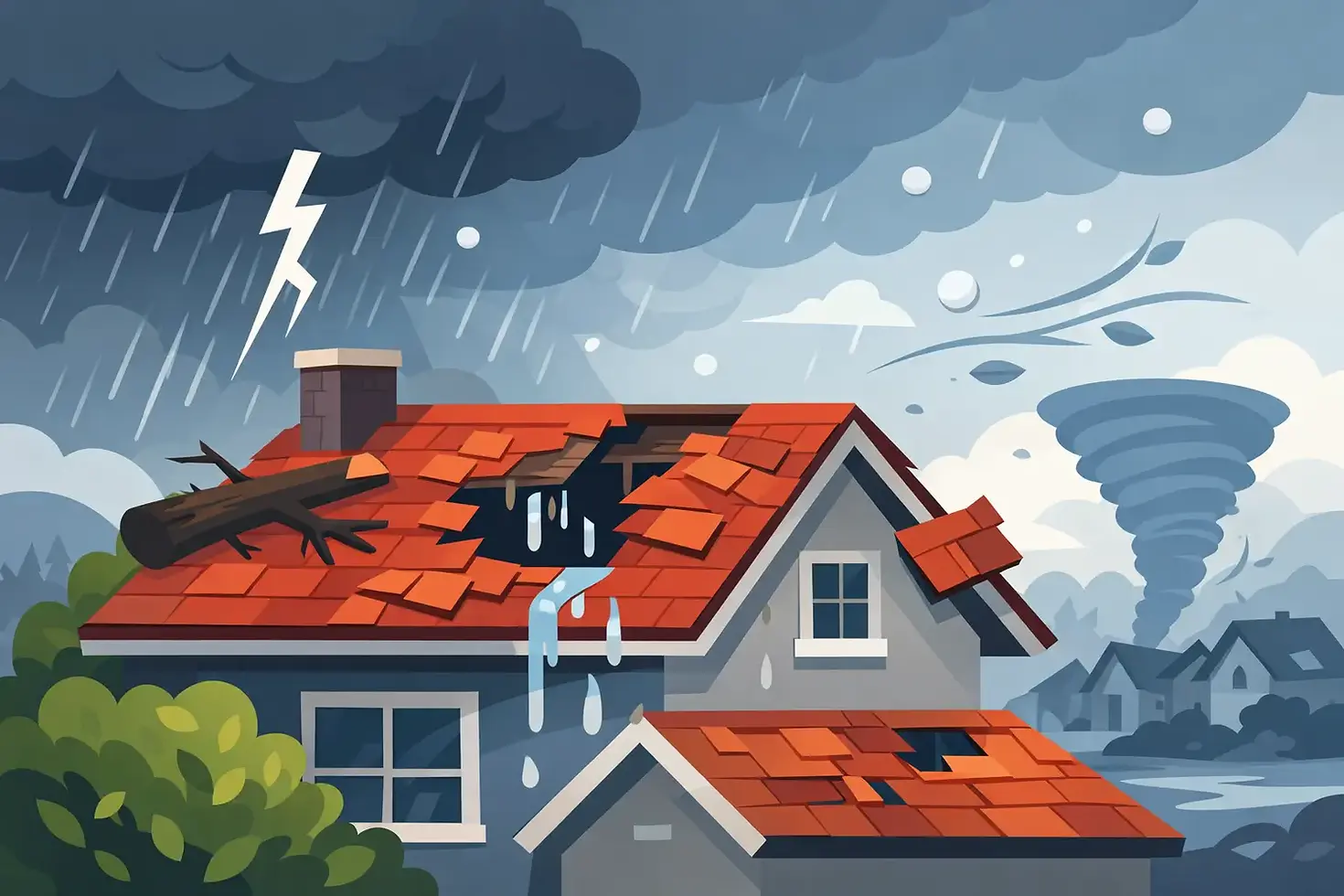
How Storm Damage Affects Roofs

A roof can look fine from the driveway and still have taken a hard hit in a storm. That is one of the main reasons homeowners underestimate how storm damage affects roofs. By the time a stain shows up on a ceiling or shingles start turning up in the yard, the problem has often moved past a simple fix.
In Ottawa and nearby communities, roofs deal with a little bit of everything - high winds, heavy rain, hail, ice, snow load, and freeze-thaw cycles that can turn a small weakness into a real leak. Storm damage is not always dramatic. Sometimes it is a few lifted shingles, a dented flashing edge, or water finding its way in around a vent. The trouble is that roofs are systems, and when one part starts failing, the rest of the system has to work harder.
How storm damage affects roofs over time
Storm damage usually happens in two ways. There is the immediate damage you can see right after bad weather, and then there is the hidden damage that gets worse with time.
Immediate damage includes missing shingles, broken tabs, damaged flashing, torn underlayment, punctures from fallen branches, and bent or detached eavestrough sections. Those issues are easier to spot, but they are not always the most expensive. A small opening in the right place can let in enough water to affect roof decking, insulation, ceilings, and wall cavities before anyone notices.
Hidden damage is often what costs homeowners more. Wind can loosen shingles without tearing them off. Hail can bruise asphalt shingles and shorten their service life even if the roof does not leak that day. Ice buildup can force water back under the roofing materials. In many cases, the roof keeps doing its job for a while, just not as well as it should. That delay is what leads people to think everything is fine.
Wind damage is not just about missing shingles
When people think of a storm-damaged roof, they usually picture shingles blown off in a strong wind. That does happen, but wind damage often starts earlier.
Strong gusts can break the seal between shingles, especially on older roofs or roofs that were already starting to wear. Once shingles lift, they are more exposed to the next storm. Repeated lifting and resealing weakens them, and that can lead to cracking, curling, or complete loss. Even if the shingle stays in place, the exposed fasteners and seams become more vulnerable to water.
Wind also targets roof edges, ridges, flashing, soffit, and fascia. If one section loosens, water and debris can get underneath. On light commercial buildings and low-slope sections, wind can also stress membrane seams and perimeter details. What looks minor from the ground can become a pathway for moisture over the next few months.
Rain finds the weak spots fast
Heavy rain is often the event that reveals damage already done by wind, hail, or age. Water does not need a large hole to get in. It only needs a weakness.
Once moisture gets under the roofing material, it can travel along decking, rafters, insulation, and framing before it appears inside the home. That is why the location of an interior stain does not always match the location of the roof problem. Homeowners sometimes assume the leak is directly above the spot they see indoors, but roof leaks are rarely that simple.
Rain also puts pressure on drainage systems. If eavestroughs are loose, clogged, or damaged in a storm, water can back up along the roof edge. That can affect fascia boards, soffit, and siding as well as the roofing itself. In other words, roof storm damage does not always stay limited to the roof.
Hail damage can shorten roof life
Hail is one of the more misunderstood forms of storm damage. Not every hailstorm ruins a roof, and not every mark on a shingle means replacement is needed. Still, hail can do real damage even when it is not obvious from the yard.
On asphalt shingles, hail can knock away protective granules or bruise the mat beneath the surface. Granule loss leaves shingles more exposed to UV rays and weathering. Bruising weakens the material and can lead to premature cracking. Flashing, metal vents, skylight components, and soft metals around the roofline can also show impact damage.
The key point is that hail damage is not always an emergency, but it is often a durability issue. A roof that might have had years left can age faster after a significant hail event. Sometimes repair makes sense. Sometimes the more practical choice is replacement, especially if the roof was already near the end of its expected life.
Ice and freeze-thaw cycles create a different kind of risk
In colder climates, storm damage is not limited to what happens during the storm itself. Ice buildup and repeated freeze-thaw cycles can be just as hard on a roof.
Ice dams are a common example. When heat escapes from the attic, snow on the roof melts and runs down to the colder eaves, where it refreezes. That ridge of ice can trap more water behind it, and that water may work its way under shingles. The result can be leaks, damaged decking, stained ceilings, and mold in insulation or wall cavities.
Freeze-thaw movement also affects flashing, sealants, and older roofing materials. Tiny gaps open, close, and open again. Over time, that movement turns manageable wear into storm-related failure. If a roof already has weak spots, winter weather tends to find them.
How to tell if your roof took storm damage
After a strong storm, it is worth checking for signs of trouble, even if nothing looks urgent at first glance. You do not need to climb onto the roof to spot some of the more common warnings.
Look for shingles in the yard, bent or detached flashing, dented vents, sagging eavestroughs, granules collecting near downspouts, and branches that may have struck the roof. Inside the home, watch for new water stains, peeling paint near ceiling lines, damp attic insulation, or musty smells after rain.
That said, not all storm damage is visible from the ground. Lifted shingles, compromised seal strips, and subtle hail bruising are easy to miss. A professional inspection helps determine whether the roof needs a minor repair, a more involved fix, or simply monitoring.
Repair or replacement depends on more than the storm
One of the most common homeowner questions is whether storm damage means the whole roof has to be replaced. Sometimes yes, often no.
It depends on the age of the roof, the extent of the damage, the type of roofing material, and whether the affected area can be repaired properly without creating mismatch or repeat problems. A newer roof with limited wind damage may only need targeted shingle and flashing repairs. An older roof with widespread hail impact, brittle shingles, or repeated leak history may be better served by replacement.
This is where experience matters. The right recommendation is not always the biggest job. It is the one that solves the problem and holds up over time. A dependable contractor will tell you when a repair is enough and when putting more money into an aging roof no longer makes sense.
Fast action usually saves money
Storm damage has a way of getting more expensive when it is ignored. A few lifted shingles can become rotten decking. A damaged vent boot can become stained drywall, wet insulation, and interior repair. What starts outside rarely stays outside for long.
That does not mean every issue needs a full emergency response. It does mean a timely inspection is a smart move after severe weather. Catching damage early gives you more repair options and a better chance of avoiding secondary problems.
For homeowners who want the job done right the first time, a thorough roof inspection after a major storm is not overreacting. It is basic protection for the house, the attic, and everything underneath. Companies like Sky High Roofing & Siding have seen how small storm issues turn into major repairs when they sit too long.
A storm lasts a few hours. The damage it leaves behind can affect your roof for years. If something looks off, or even if you are just not sure, getting it checked now is usually the better call than finding out the hard way during the next rainfall.


Comments